AI Transformation: Planning Technology, Organization and Culture Together
An AI transformation succeeds when technology, organization and culture sit in one plan that a single person owns. Only a small minority of companies so far achieve measurable value from AI at scale. The reason rarely lies in the technology: the larger part of the effort in a successful AI rollout goes into processes, roles and people, and these are exactly the layers many companies plan separately from the technology. This article describes how to plan the three layers jointly, how long a transformation takes and how to recognize that delivery is working.
Why do AI transformations fail?
AI transformations mostly fail because of separate plans: IT procures platforms, a business unit tests applications, HR offers training, and nobody is accountable for bringing it all together in the same quarter. Each line is plausible on its own, yet together they leave a gap between what is technically possible and what reaches daily operations.
Whether a company has a joint plan can be tested with three questions. Who is accountable for an AI application actually being used in operations? Which budget covers the process changes needed for the benefit? Which metric shows after one quarter whether working behavior has changed? If the answers differ by unit, there is a collection of initiatives without a joint plan.
This coexistence has an understandable cause. The three layers belong to different areas of responsibility with their own budgets and their own measures of success. Technology follows release cycles, organization follows the annual plan, and culture shows its effect only after months. Without a body that synchronizes these rhythms, each layer optimizes by its own logic. Many executive teams know the result: the prototype works, the roles are unclear, and the business units use the application hesitantly.
The spread of AI shows how wide this gap can become. According to the German Federal Statistical Office, 26 percent of companies in Germany with ten or more employees used AI in 2025, rising to 57 percent among companies with 250 or more employees. Large international surveys of corporations consistently show that only a small share of users derive a material contribution to results from it.
How effort is distributed across the layers
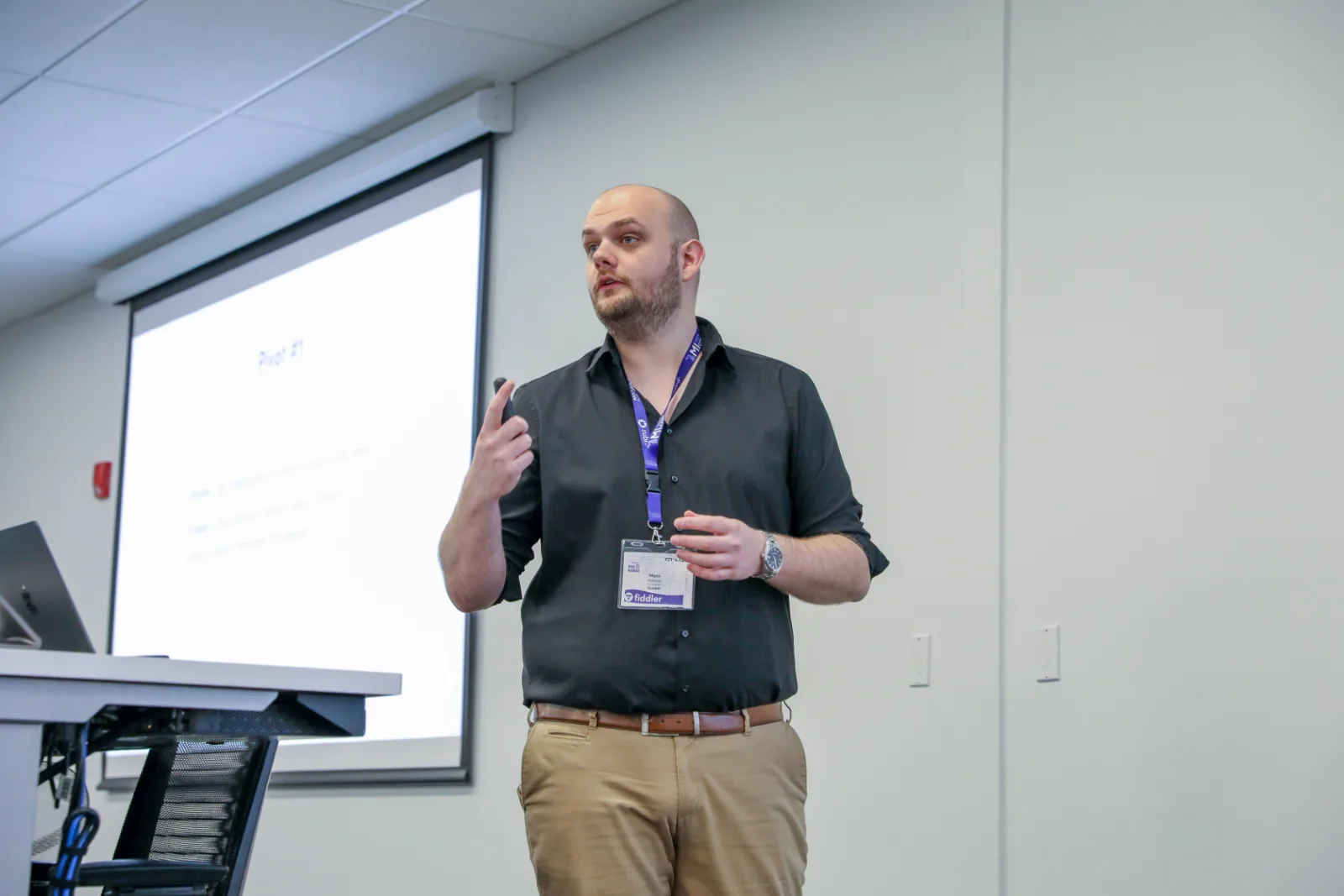
In planning AI programs, the 10-20-70 rule has become established as a rule of thumb: around 10 percent of the effort goes into algorithms and models, around 20 percent into technology and data, and around 70 percent into people and processes. The rule is a planning guide, not a measured value. It describes the weighting that successful programs reflect in budget and capacity.
Exhibit 1 · Schematic
Under the 10-20-70 rule most of the effort goes into people and processes
Note: rule of thumb and planning guide, not a measured value
For the executive team this implies a test question for every plan: how much of the budget goes into licenses and platforms, and how much into adapting processes, enabling employees and clarifying roles? If the share for people and processes is below half, the company is planning a technology rollout and calling it a transformation.
Field research also shows that the benefit arises in the process. A field study of more than 5,000 customer service agents found that an AI assistant raised cases resolved per hour by around 14 percent on average. The effect arose in daily operations, among people who had built the tool into their everyday work.
The three layers and their decision questions
Each layer brings its own decisions that belong in the joint plan. The following checklist serves as a template for the first workshop with the executive team.
At the technology layer, the issue is selection and sequence. Not every feasible application brings the greatest benefit, and not every high-benefit application can be implemented with the available data. The sequence comes from a business case per application and a sober assessment of the data situation. How to test the technical prerequisites is described in AI readiness: technology, data, organization.
At the organizational layer, it is decided whether an application becomes a result. An application needs a business owner with budget and decision rights as well as a defined operating process. In addition, there must be a rule for what happens in the event of disruptions. Without an owner, responsibility drifts back and forth between IT and the business unit, and the application becomes outdated. Roles and decision paths are therefore fixed before the rollout starts.
At the cultural layer, what counts is what leaders model and recognize. When a unit head requires use of the application in their own meetings and measures results by it, the team follows. Without this signal, the application remains an offer that people may use but need not. The strongest lever at the cultural layer is a small number of visible leadership decisions, supported by enablement and goals that reward use.
What distinguishes AI transformation from digital transformation?
Digital transformation transfers existing processes into software with fixed rules, while AI transformation changes who does which work in the process and how decisions are made. Digital systems deliver the same result for the same input. AI systems deliver suggestions with an error rate that must be checked continuously.
This leads to three differences for steering. First, AI changes tasks within roles, for instance when a clerk moves from entering data to reviewing suggestions; role descriptions and enablement have to keep pace. Second, every application needs ongoing quality assurance in operations, because data and models change. Third, AI shifts accountability: whoever adopts an AI suggestion is responsible for the result, and this rule must be settled before deployment. Digital transformation is thus a prerequisite for AI transformation, but does not replace it.
How long does an AI transformation take?
An AI transformation is a program of two to three years. The first prototypes run in the real process after three to four months, and the first applications are in operation after twelve months. Transfer to further units follows, until AI is part of regular operations in the core processes.
The plan follows a dual strategy. One or two applications with high benefit and low adaptation effort come first, because they provide early evidence. In parallel, the redesign of a core process begins, because that is where the larger part of the value lies. Collecting only small quick wins produces many pilots and little impact on results. Guidance for the first year is given in AI roadmap: the first twelve months.
A four-step approach
In the first step, clarifying the starting position, goals and bottlenecks as well as possible applications are brought together in a target picture. The result is a list of prioritized applications with a business case and a business owner. Each application also receives a target state for technology and ways of working.
The second step sets the sequence according to the dual strategy. The third step builds prototypes that show their benefit in the real process, together with the people who will later work with them. A prototype in daily operations provides measurements of time saved and error rate as well as usage behavior. The fourth step implements: responsibilities are named, processes adapted, employees enabled, and the transfer into operations is planned with internal or external teams. How this transfer succeeds is covered in From pilot to scale.
Steering by the executive team
The joint plan needs a joint rhythm. A proven setup is a monthly steering meeting led by the executive team or a person it appoints, at which a few metrics per layer are reviewed. For technology these are availability and quality of results, for organization the share of applications with a named owner, and for culture actual usage in the business units. The metrics appear in the same report, so that deviations at one layer are immediately related to the others.
Niehues Consulting as a partner for joint planning
Niehues Consulting supports companies in delivering AI initiatives from application selection to acceptance in the business units. Founder Marin Niehues works as a management consultant from the delivery perspective: he builds organizations that deliver and brings AI into operations. His projects range from VC-funded scale-ups to DAX 40 groups, with assignments in 20+ countries on six continents and a home base in the DACH region.
The approach follows the Niehues Delivery Model with the phases Understand, Build and Implement. Three of its test questions matter most for a transformation across three layers. In Understand: who decides, who delivers, who uses? In Build: which roles, decision paths and interfaces does operations need? In Implement: are users enabled and processes adapted? The first question settles accountability, the second the organization, the third culture in daily work. The framework for steering all applications is described in the article AI management: what executive leadership must steer.
The work covers AI management with business analysis, business case and sequencing of applications, as well as prototypes in the real process and rollout. Delivery management and organizational design ensure that roles and decision paths fit the undertaking; on request, Marin Niehues takes over steering as delivery manager or product owner. The entry point is a free initial consultation of 30 minutes, in which the starting position and the sequence of applications are discussed.
Frequently asked questions
What is the 10-20-70 rule in AI?
The 10-20-70 rule is a rule of thumb for planning AI programs: around 10 percent of the effort goes into algorithms, around 20 percent into technology and data, and around 70 percent into people and processes. It is a planning guide from practice, not a measured value. Its message is clear: most of the work lies in the organization.
What does an AI transformation involve?
An AI transformation involves selecting and rolling out applications, adapting roles and processes and changing ways of working. Technical rollout alone is not enough, because the benefit arises only when employees use the application in daily operations.
Who should own an AI transformation?
An AI transformation is owned by a member of the executive team or a leader they authorize, with budget and decision rights over the units involved. Purely technical ownership in IT is not enough, because the roles and ways of working of the business units have to change as well.
Do you need a Chief AI Officer for an AI transformation?
A company needs a Chief AI Officer when more than a handful of applications run in several units at the same time and no member of the executive team can take over steering. In smaller programs, a named member of the executive team with a delivery manager alongside is sufficient. What counts is accountability for results, not the title.
How much does an AI transformation cost?
The cost of an AI transformation is driven by the number of core processes being redesigned and, following the 10-20-70 rule, mostly by people and processes. In the German market, external consulting is typically billed at around 1,000 to 2,500 euros per consultant day, according to the BDU fee study. Plan the budget per application through the business case and reserve the larger part for rollout and enablement.
How do you change company culture for AI?
You change company culture for AI through visible leadership decisions: unit heads use the applications themselves, require them in meetings and recognize results. Enablement and goals that reward use support these signals. Open handling of system errors lowers the threshold.
Which metrics show progress?
Progress is shown by the usage rate in the business units, the time to result for a work step, the quality of results and the share of applications with a named owner. These values belong in a joint report that the executive team reviews monthly.
Let’s talk about your initiative.
In 30 minutes we clarify where your organization stands and which step will pay off most now.
Request a consultation30 minutes · free · no obligation