Embedded AI: Building AI into Products and Processes
Embedded AI is AI built into a product or process as a permanent function and used within the familiar tool, without a separate AI application. It works at scale when the organization has settled how the function is delivered and operated. The model is the smaller part of the task. The larger part is data supply and testing. Operation and accountability come on top. This article describes what the delivery organization has to provide.
What is embedded AI, and how does it differ from edge AI?
Embedded AI has two meanings. Technically, the term refers to AI that runs directly on devices and embedded systems. In management, it refers to AI as a permanent part of a product or process. This article covers the second meaning, namely how a company takes an AI function permanently into its delivery scope.
The technical meaning breaks down as follows:
- Edge AI: AI models run close to the data source, on end devices or local servers instead of a remote data center. This saves transmission time and keeps data on site.
- Embedded AI in the technical sense: the part of edge AI in which the model runs on an embedded system, for example on a microcontroller or on a processor with its own AI accelerator inside a camera.
- TinyML: machine learning on microcontrollers with very low power consumption in the range of a few milliwatts. Typical tasks are vibration monitoring and the recognition of individual voice commands directly in the sensor.
For executive management, both meanings are the same delivery task. Whether a model runs in the sensor of a machine or as a forecasting function in industry software: it needs an owner as well as a release procedure and an operating route.
What distinguishes embedded AI from an AI pilot
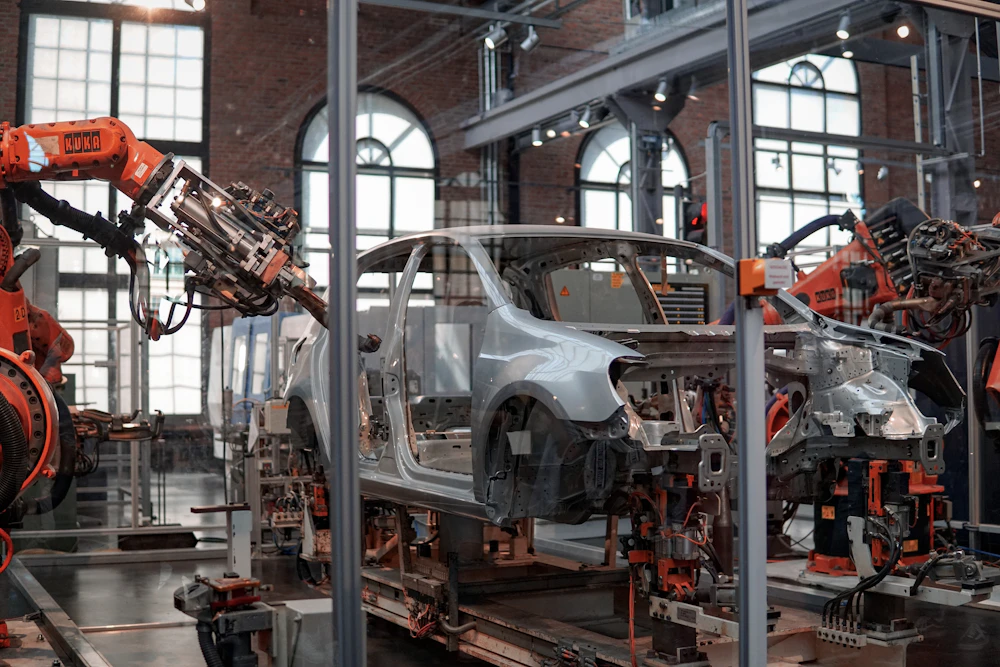
A pilot shows that an application works within a limited scope. Embedded AI means that the function becomes part of the delivery scope. It receives an owner and a version number. Release and support routes are defined. Examples are image recognition on a production line or a forecasting function in industry software.
This changes the requirements fundamentally. The function has to behave predictably when data changes and when models are replaced. Every change to the model acts like a change to the product and requires the same degree of testing. A widely cited paper by Google researchers on hidden technical debt in machine learning systems shows that the actual model code makes up only a small part of the overall system. The rest consists of data pipelines and configuration as well as monitoring and the serving environment. The article From pilot to scale describes the overall rollout.
What are the advantages and disadvantages of embedded AI?
Embedded AI raises usage because it brings AI to where the work happens. In return, it commits the company to maintaining and operating the function across the entire product life cycle.
The decision criterion: if a task recurs frequently in the same tool and its result can be checked, embedding pays off. If the task is rare or handled differently each time, an AI assistant that employees call up when needed is sufficient.
Four building blocks of delivery capability
From a delivery perspective, embedded AI divides into four building blocks. If one is missing, the function stays in pilot status, whatever the quality of the model.
- Product ownership: A product owner holds the AI function with a target value and a budget. The owner decides on the quality sufficient for release as well as on the approval of every change.
- Data supply: The function needs a secure flow of current data with a named data owner. Anyone who changes data must know which AI function depends on it.
- Release and quality assurance: Test cases and acceptance criteria form the basis for decisions together with a reproducible testing procedure. They are fixed before the build and apply to every change.
- Operation and further development: Monitoring and fault handling are assigned to a team that continues to exist beyond the project period. The same team plans model maintenance.
Organizations rarely build these blocks at the same time. Usually a strong development team emerges first. Product ownership and operation remain open. The sequence of measures therefore follows the bottleneck: responsibility is settled first. Procedures and tools follow afterwards.
When embedded AI falls under the AI Act
When a manufacturer builds AI into a product, the first legal question is whether the product falls under the EU harmonization legislation listed in Annex I of the AI Act, for example for machinery or medical devices. If the AI is a safety component of a product that must undergo a third-party conformity assessment, it counts as high-risk AI. Obligations follow for providers as well as for deployers. For industry software and internal processes, classification depends on the intended purpose. This article provides an overview and does not constitute legal advice. The article High-risk AI under the AI Act covers the classification in detail.
How much does it cost to build AI into a product?
The cost of building AI into a product consists of three one-off blocks up to readiness for scale plus the annual running costs. The calculation for executive management is:
- Clarification: consulting days for business analysis and the business case. In the German market, external consulting is typically billed at around 1,000 to 2,500 euros per consultant day.
- Prototype: development effort of the team. Data and compute costs for training or adapting the model come on top.
- Transfer: integration into the product or business system as well as testing and handover to the operations team. For functions at scale, this block exceeds the prototype.
- Operation per year: compute or hardware costs per use as well as model maintenance and support.
The sum of blocks 1 to 3 is the investment, set against the annual benefit minus block 4. A function is worth embedding when this calculation holds with real values from the prototype.
From prototype to scale
The approach has three phases. First, management clarifies where an embedded AI function creates measurable benefit, based on a robust business case. A use case with high benefit but no available data moves back in the sequence.
Next, a prototype proves its benefit in the real process. It runs on real data with the future users and delivers a measurement against the target value of the business case. At the same time, readiness for scale develops: the connection to the existing IT landscape is in place, the test scope is defined, the handover requirements of the operations team are met.
Finally, the function goes into operation with internal or external teams. Processes and responsibilities are part of this phase, as is user enablement. A function counts as implemented only when the business unit uses it without the project team.
Roles, interfaces and decision routes
Readiness for scale arises at the interfaces between the areas involved. Without defined decision routes, every change waits for coordination between these areas. Lead time then rises with every further function.
A clear allocation of decision rights has proved its worth. The product owner decides on scope and release. Technical leadership decides on architecture and model choice. The business unit decides whether the benefit materializes. Operations holds a veto where monitoring and recovery procedures are missing. Each role is filled by a named person.
Steering with metrics
Embedded AI is steered as a portfolio with five metrics. The share of prototypes reaching regular operation shows the ability to transfer. Lead time from model change to release shows the maturity of testing. Quality in live operation against the target value shows the real benefit. The degree of use shows acceptance. Cost per use shows whether the function scales economically. A function that stays below its target is reworked or ended by the product owner.
Niehues Consulting as a partner for readiness at scale
Niehues Consulting accompanies companies along the path described, following the Niehues Delivery Model with the phases Understand, Build, Roll out. Three of its review questions matter most for embedded AI: Does the prototype prove the benefit in the real process with real data? Who is accountable for operation from day one? Which metric shows after 90 days that the solution is landing?
In AI management, the business case takes shape together with the selection and sequence of applications. In operationalisation and rollout, Niehues Consulting develops prototypes that prove the benefit in the real process. Niehues Consulting then takes them through acceptance by the business units into operation, with internal or external teams. In delivery management, Marin Niehues takes over steering as delivery manager or product owner and, in organization design, shapes roles and decision routes. His projects range from VC-funded scale-ups to DAX 40 groups, in 20+ countries on six continents. The entry point is a free 30-minute initial consultation, which you can arrange via Contact.
Frequently asked questions
What is embedded AI?
Embedded AI refers to AI functions built firmly into products or business applications that appear as part of the delivery scope. Users work with them in their familiar tool without opening a separate AI application. Technically, the term also refers to AI that runs directly on embedded systems such as microcontrollers.
What is the difference between embedded AI and edge AI?
Edge AI is the umbrella term for AI that runs close to the data source, on devices or local servers instead of in the cloud. Embedded AI in the technical sense is the part of it in which the model computes on an embedded system inside the device itself. In management usage, embedded AI additionally means any AI built firmly into a product or process.
What is TinyML?
TinyML is machine learning on microcontrollers with power consumption in the range of a few milliwatts. The models are compressed so that they run directly in the sensor, for example for vibration monitoring or recognizing individual voice commands. Data does not leave the device.
How does embedded AI differ from an AI assistant?
An AI assistant is a standalone tool that employees call up deliberately. Embedded AI works inside a product or process. Users work with it in their familiar tool without opening a separate AI application. Higher requirements for release and quality assurance as well as for operation follow from this.
Who is responsible for an embedded AI function?
Overall responsibility lies with a product owner who steers target value and budget as well as release. Technical leadership and the business unit each hold their own decision rights, laid down in writing. Operations holds a veto where monitoring is missing.
What are examples of embedded AI?
Examples are image recognition for quality inspection on a production line and vibration analysis in the sensor of a machine. Forecasting functions in industry software as well as suggestions in ERP systems are further cases. The automatic classification of incoming cases in a business application also belongs here.
Does the EU AI Act apply to AI in products?
The AI Act also applies to AI in products. If the AI is a safety component of a product covered by the harmonization legislation in Annex I that requires a third-party conformity assessment, it counts as high-risk AI. Clarify this classification before the build, because it determines the test scope.
Let’s talk about your initiative.
In 30 minutes we clarify where your organization stands and which step will pay off most now.
Request a consultation30 minutes · free · no obligation